 CAFF - Arctic Biodiversity Data Service (ABDS)
1000000
Type of resources
Available actions
Topics
Keywords
Contact for the resource
Provided by
Years
Representation types
Update frequencies
status
Scale
-
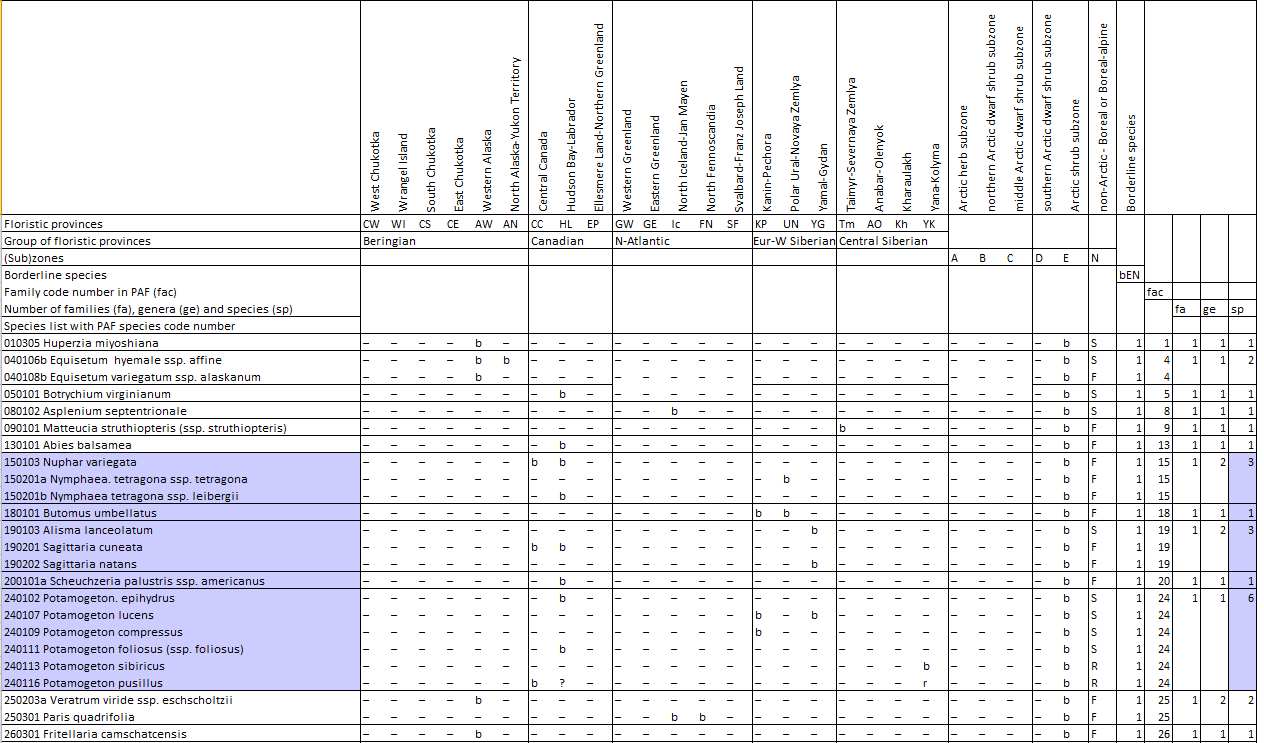
Appendix 9.3 Borderline vascular plant species (“b”) with indication of PAF code number, reaching the southernmost part of the Arctic subzone E. Arctic floristic provinces, subzones (A-E), neighbouring boreal or boreo-alpine zone (N) derived from Elven (2007).
-
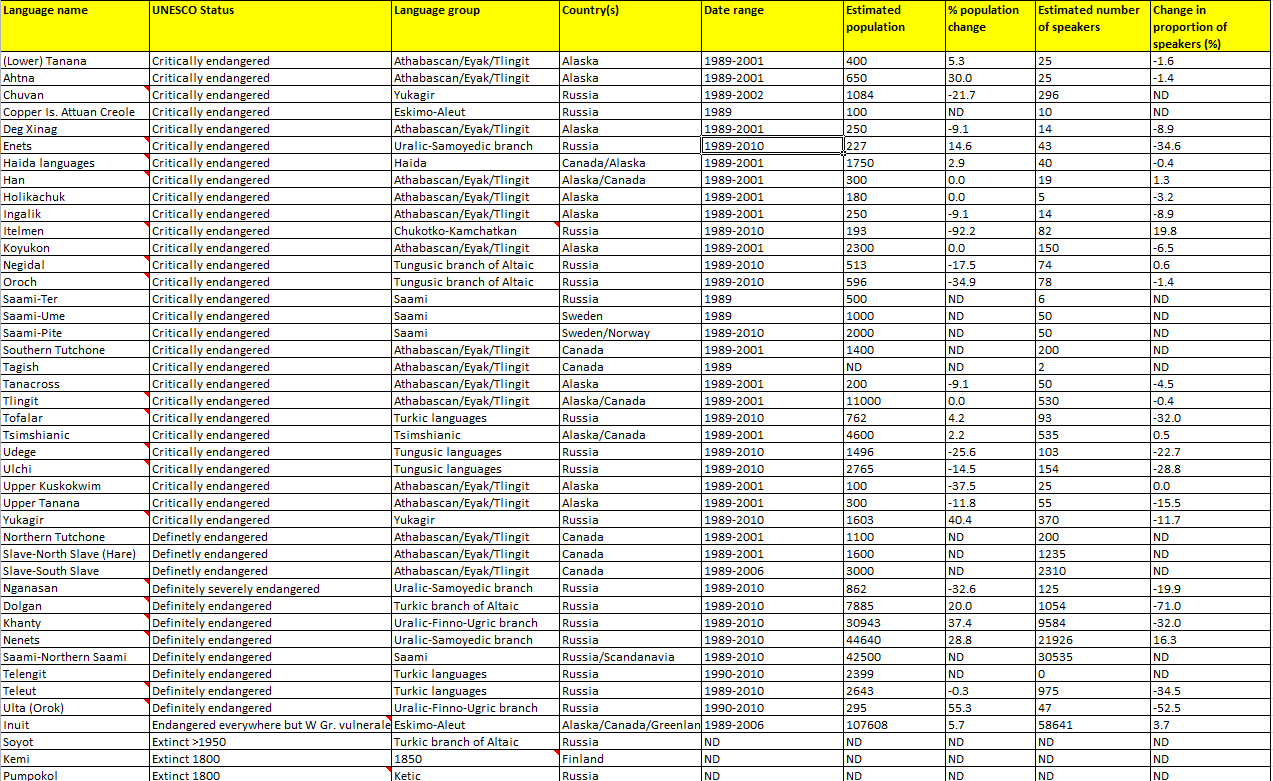
Appendix 20. Arctic indigenous languages status and trends. Data used to compile the information for the table was collected from both census records and academic sources, each of the CAFF countries and indigenous peoples organizations (Permanent Participants to the Arctic Council) where possible also provided statistical information.
-
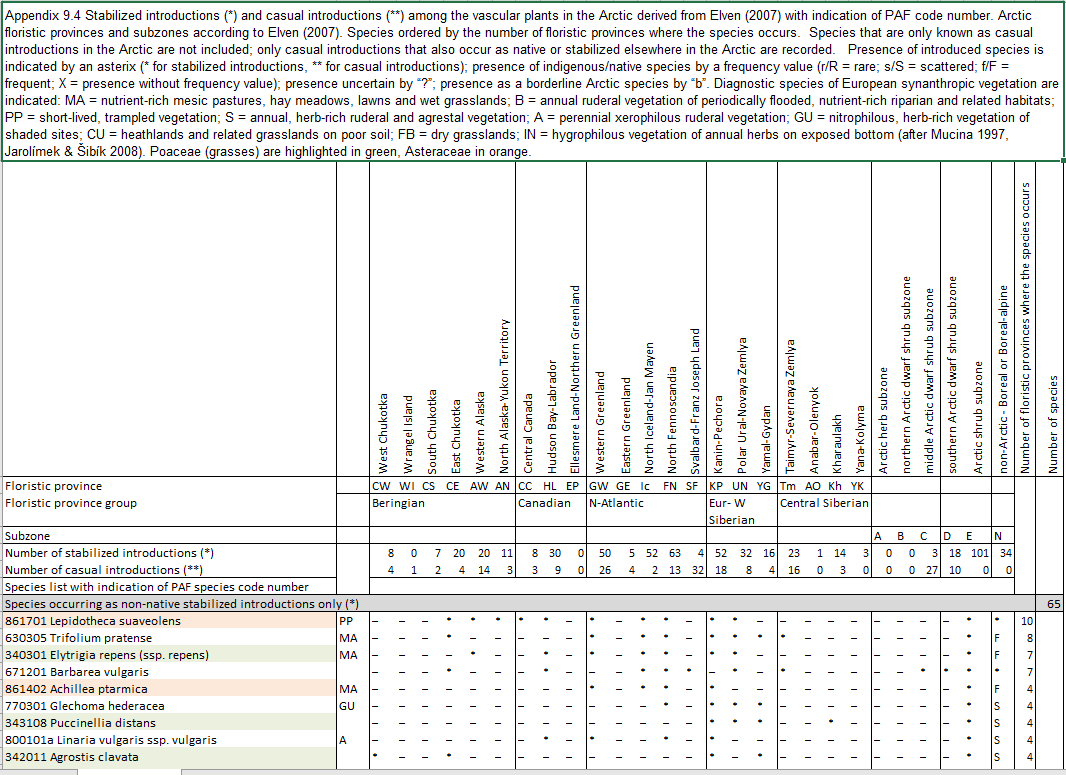
Appendix 9.4 Stabilized introductions (*) and casual introductions (**) among the vascular plants in the Arctic derived from Elven (2007) with indication of PAF code number. Arctic floristic provinces and subzones according to Elven (2007).
-
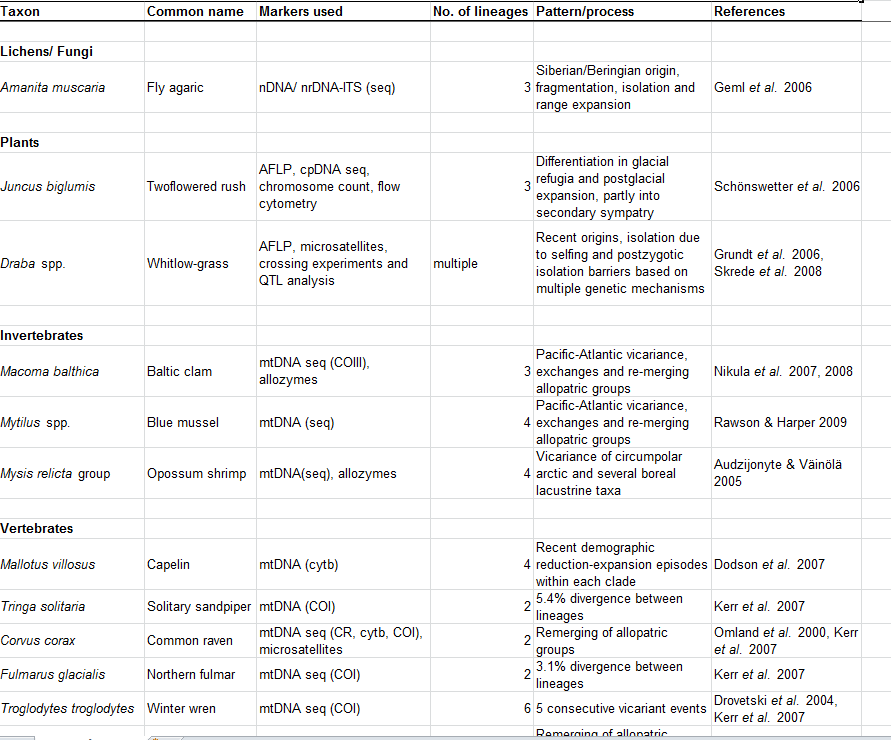
Appendix 17.2. Cryptic speciation in selected Arctic terrestrial and marine species.
-
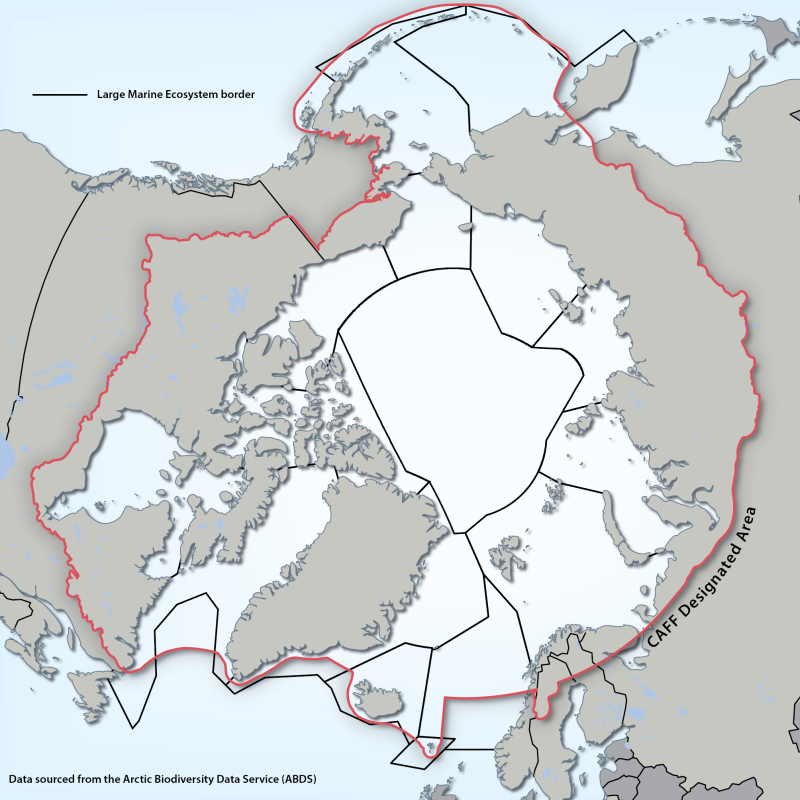
Large Marine Ecosystems (LMEs) are regions of ocean space encompassing coastal areas from river basins and estuaries to the seaward boundary of continental shelves and the seaward margins of coastal current systems. Fifty of them have been identified. They are relatively large regions (200 000 km2 or more) characterized by distinct bathymetry, hydrography, productivity and trophically dependent populations. The LME approach uses five modules: 1. productivity module considers the oceanic variability and its effect on the production of phyto and zooplankton 2. fish and fishery module concerned with the sustainability of individual species and the maintenance of biodiversity 3. pollution and ecosystem health module examines health indices, eutrophication, biotoxins, pathology and emerging diseases 4. socio-economic module integrates assessments of human forcing and the long-term sustainability and associated socio-economic benefits of various management measures, and 5. governance module involves adaptive management and stakeholder participation.” Source: http://www.fao.org/fishery/topic/3440/en Reference: Sherman, K. and Hempel, G. (Editors) 2009. The UNEP Large Marine Ecosystem Report: A perspective on changing conditions in LMEs of the world’s Regional Seas. UNEP Regional Seas Report and Studies No. 182. United Nations Environment Programme. Nairobi, Kenya. Data available from: http://lme.edc.uri.edu/ - LMEs of the world Updated shape file - 2014
-
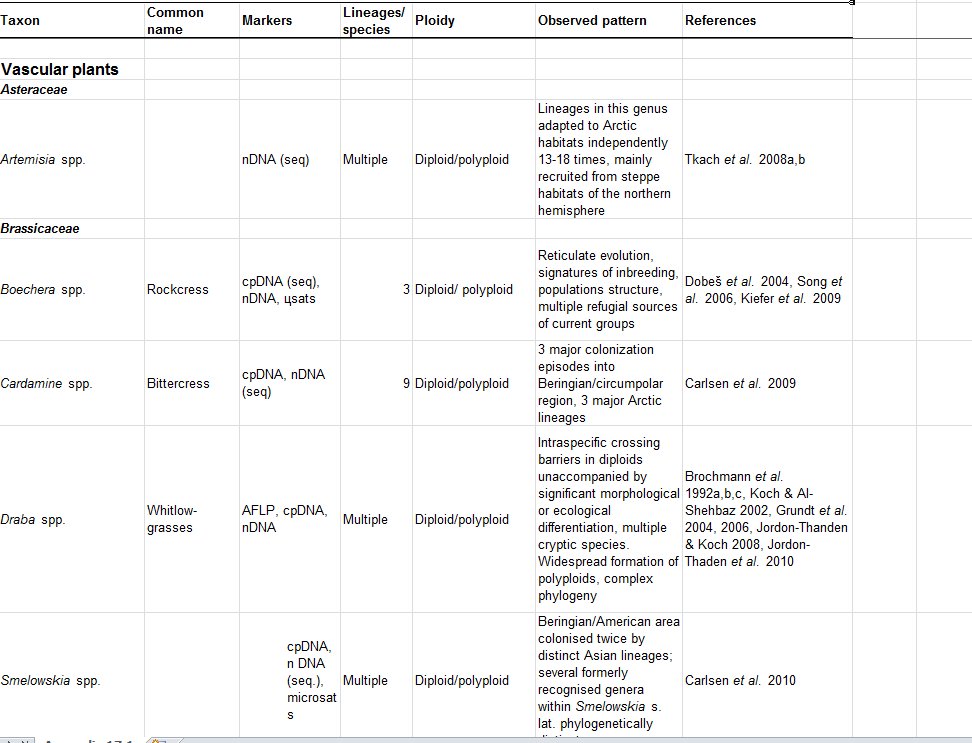
Appenidx 17.1. Selected phylogenetic studies of (or including) Arctic taxa.
-
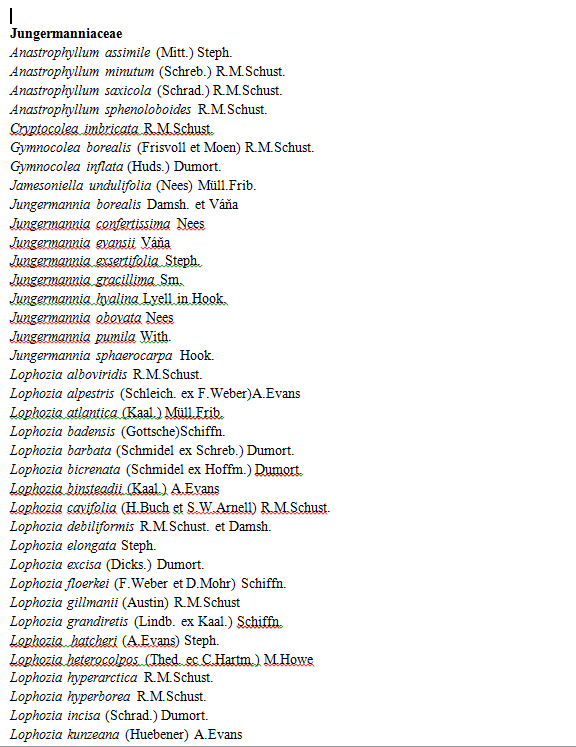
Appendix 9.7 Species list with full names of liverworts of Greenland according to Damsholt (2010, unpublished) including 22 families, 50 genera and 173 species.
-
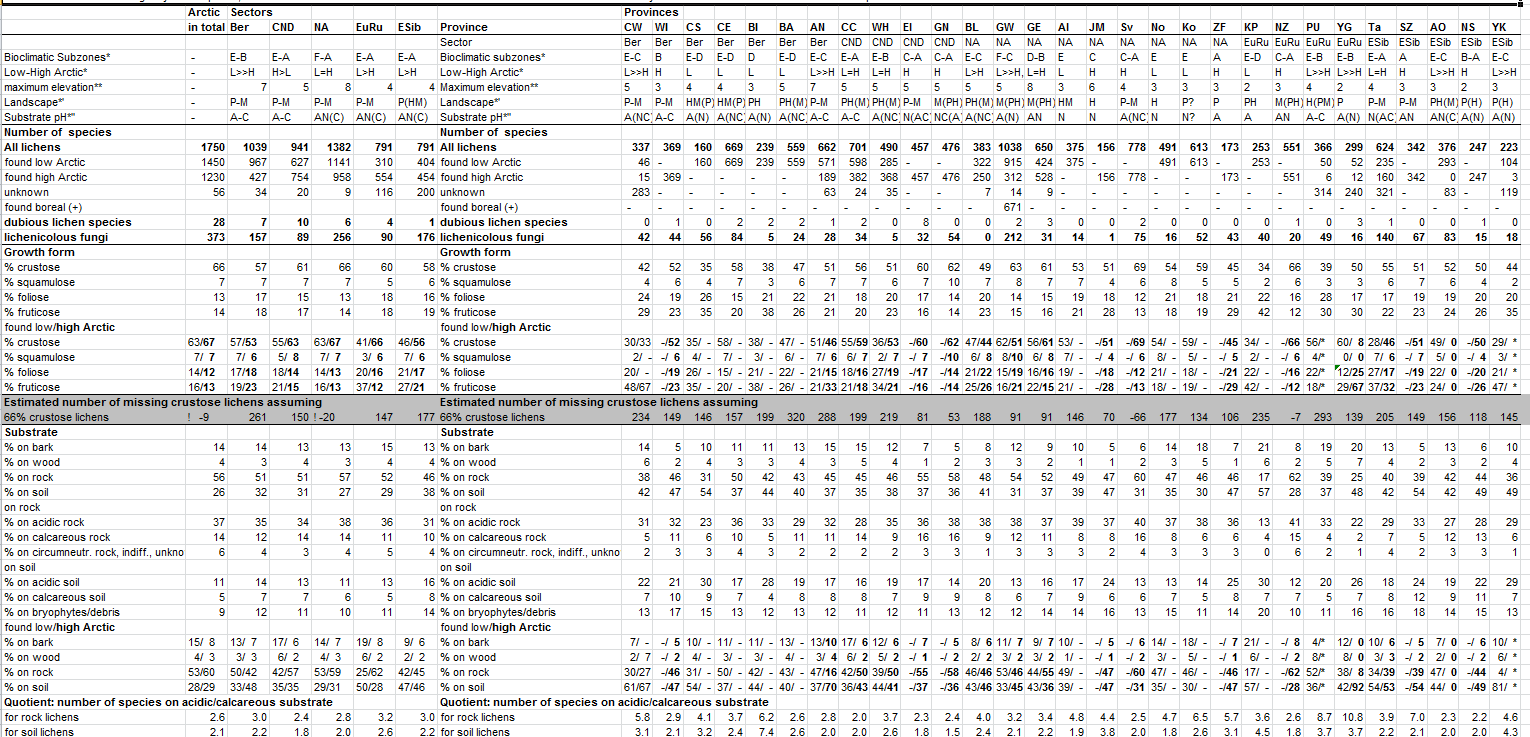
Appendix 10.2. Data on diversity of lichens and lichenicolous fungi in the Arctic and separately for the sectors of the Arctic (Beringia, Canada, North Atlantic, European Russia, W and E Siberia) and the single floristic provinces: numbers of species, numbers of species in the low and high Arctic, percentage of species with respective growth form (crustose, squamulose, foliose, fruticose), the estimated number of missing crustose lichen species (explanations below), percentage of species on the respective substrate on which the lichen species grow, and rarity of species within and outside the Arctic.
-
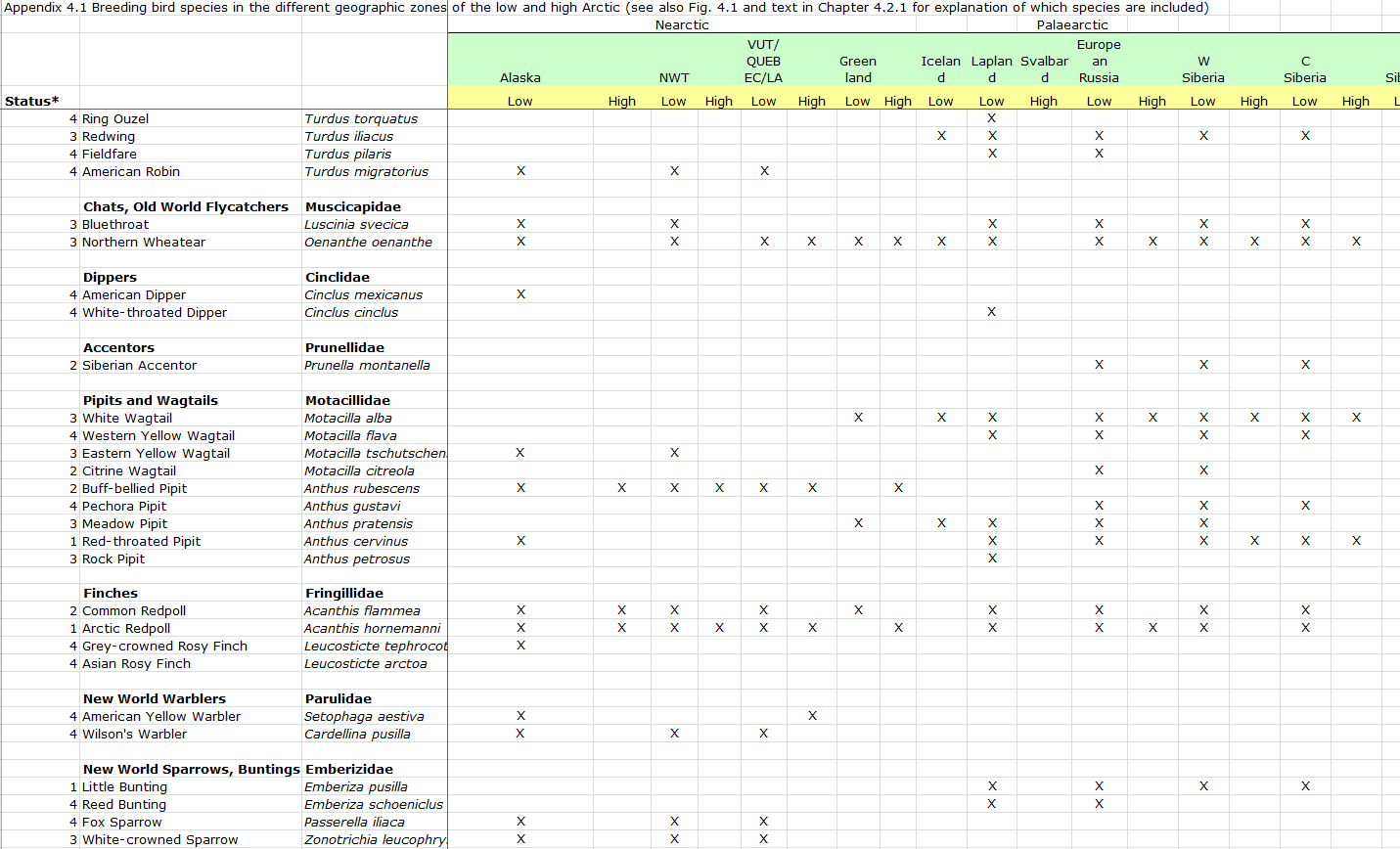
Breeding bird species in the different geographic zones of the low and high Arctic
-
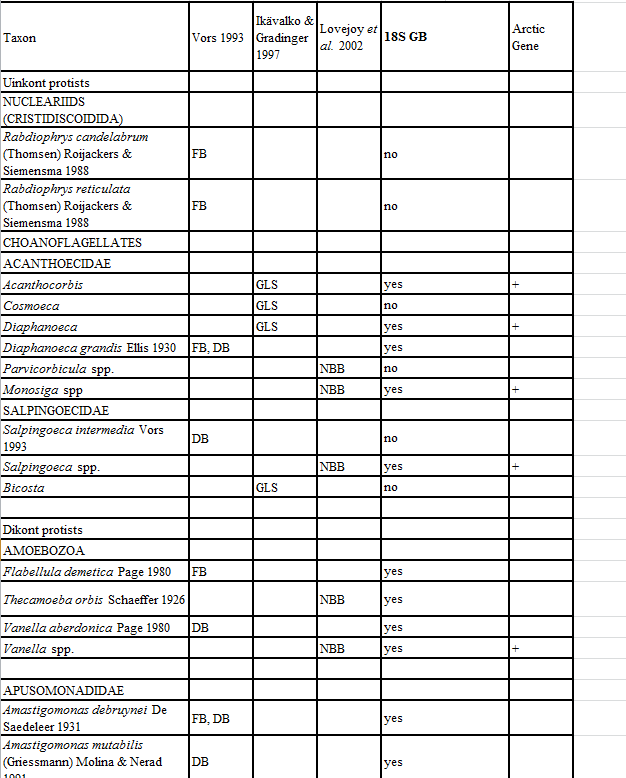
Appendix 11. Taxa of hetorotrophic protists reported from Foxe Basin, Canada (FB), Disko Bay, W Greenland (DB; Vors 1993), the Greenland Sea (GLS; Ikävalko & Gradinger 1997) and Northern Baffin Bay, Canada (NBB; Lovejoy et al. 2002).